RATQ: Autonomous self-repair for gas leaks
A closed loop combining sensing, AI, and drones to cut leak response time from hours to minutes — without putting a human crew at risk.
The challenge
Gas networks in desert environments stretch across vast, hard-to-reach areas. When a leak occurs, hours pass between detection, dispatching a field crew, and completing the repair — hours during which gas is wasted, emissions rise, and workers face harsh, dangerous conditions.
The solution
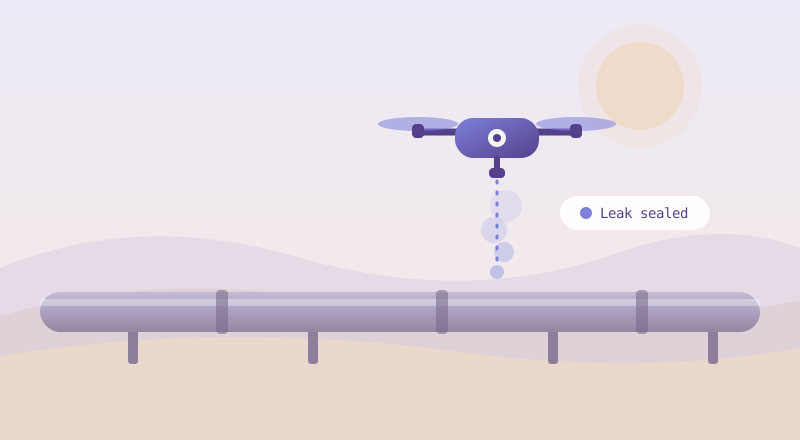
An integrated system that works as a closed loop: sensors distributed across the network monitor continuously, an AI model predicts and locates leaks, and a drone launches automatically to perform aerial repair the moment a leak is detected — then the system learns from every incident to improve.
How it works
- Sense: IoT sensors along the network monitor indicators in real time.
- Think: A predictive model detects the leak, pinpoints its location, and assesses priority.
- Act: A drone launches automatically and performs the aerial repair on site.
- Learn: Data from each incident feeds the model, continuously improving prediction and response accuracy.
The impact
Hours to minutes
Leak response time drops dramatically because repair begins the moment of detection.
Fewer emissions
Every minute saved means less wasted gas and lower methane emissions.
Crew safety
No need to send workers to remote, dangerous sites for every incident.
Always on
A system that runs day and night in environments people can't endure for long.